


80TTA vs 80TTB — What’s the Difference?
- Updated On:27 Feb 2026
 Views
Views- 2 min read
https://www.shriramlife.com/blog/advice/80tta-vs-80ttb-whats-the-difference


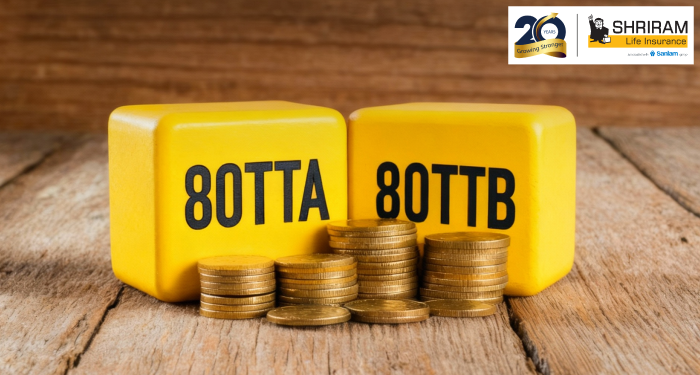
If you’re dealing with interest income on your savings or deposits, you’ve probably seen both Section 80TTA and Section 80TTB. They sound alike — but they aren’t. Understanding the difference between 80TTA and 80TTB can help you choose the right tax deduction while filing returns.
What do 80TTA and 80TTB Sections Mean
Section 80TTA is a deduction on interest earned from savings accounts. It’s for regular taxpayers (including HUFs) who are not senior citizens.
Section 80TTB, on the other hand, is meant for senior citizens (60 years old or more). It covers interest not only from savings accounts but also from fixed deposits and recurring deposits. It offers a bigger benefit — because retired or older people often rely on such interest income.
Who Qualifies & What’s the Limit
Here’s a quick side-by-side:
| Section | Who Can Use It | Interest Type | Max Deduction |
| 80TTA | Individuals / HUFs below 60 years | Savings account interest only | ₹10,000 annually |
| 80TTB | Senior citizens (60+ years) | Savings accounts + FDs/RDs deposits | ₹50,000 annually |
So, if you’re under 60, go for 80TTA. If you’re 60 or older, 80TTB gives you more room to save on tax.
Why That Matters: Example
Let’s say Raj, age 30, earns ₹9,500 in savings-account interest this year. Under 80TTA, he can claim ₹9,500 deduction (it’s less than the ₹10,000 cap).
Now imagine Mrs. Desai, age 65, who earns ₹30,000 from her fixed deposits + ₹8,000 from savings interest (total ₹38,000 interest). Under 80TTB, she gets to deduct that full ₹38,000 — well within the ₹50,000 limit.
If her total interest had been ₹60,000, she could still only deduct up to ₹50,000 under 80TTB, and the rest (₹10,000) will get taxed.
Important Notes
- If you are a senior citizen, you cannot use 80TTA — you should use 80TTB instead.
- You cannot claim both in the same year for the same person — pick the one that’s right for your age.
- Keep your bank interest statements ready — these help you enter the correct interest amount in your ITR.
Conclusion
80TTA and 80TTB both help reduce tax on interest income. The real difference is who you are (senior citizen or not) and what kinds of interest you receive. Use the correct section to get more benefit: ₹10,000 cap under 80TTA if you’re under 60, or ₹50,000 under 80TTB if you’re 60+.
Plans worth exploring
 Shriram Life Flexi-Shield Plan
Comprehensive Protection

Shriram Life Flexi-Shield Plan  Shriram Life Sunishchit Laabh
Secure your family's future
Shriram Life Sunishchit Laabh  Shriram Life Wealth Pro Plan
Strong Returns, Steady Protection
Shriram Life Wealth Pro Plan

Why Shriram Life
Experience
Lives covered
Claims Settled (FY 2025-26)
Explore more topics
Trending searches
OTP Verification
Please Enter OTP that has been sent to your registered
Mobile Number +91





Get a call Back to Plan Your Life Insurance
OTP Verification
Please Enter OTP that has been sent to your registered
Mobile Number +91

We’ve Got Your Details
You’re one step closer to securing a guaranteed income. Our team will contact you soon.


