


What Is Section 80DD in Income Tax?
- Updated On:27 Feb 2026
 Views
Views- 1 min read
https://www.shriramlife.com/blog/advice/what-is-section-80dd-in-income-tax


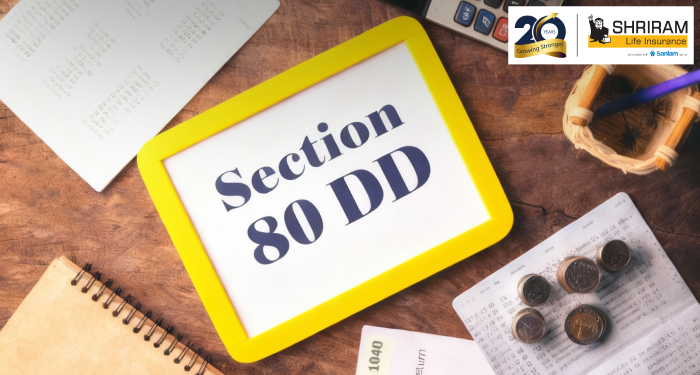
It is quite a challenge to manage the needs of a disabled family member. To share this financial strain, the government in India through Section 80DD of the Income Tax Act provides you with some tax deductions based on the money you spend on your disabled dependent. Let's try to figure out the actual meaning of it.
Who Can Claim Section 80DD?
The answer is simple. You, the Indian individual resident or a member of the Hindu Undivided Family (HUF) together with a disabled dependent in the family, can claim this tax break.
Your relatives are defined as a spouse, children, parents, brothers, or sisters.
The condition is that their impairment is at least 40%, as certified by a medical authority.
What Does Section 80DD Cover?
This deduction can be claimed for the medical expenses, nursing, training, or rehabilitation of the disabled dependent.
It can also include premiums paid toward designated insurance policies approved by the income tax department for the care of the dependent.
How Much Can You Deduct?
You get a fixed deduction of ₹75,000 if the disability is between 40% and 80%.
For severe disabilities (80% and above), the deduction increases to ₹1,25,000.
This is a flat amount, meaning you receive the deduction even if your actual expenses are less.
Example:
Ramesh supports his disabled sister, who has a 60% disability. He spends ₹40,000 on her medical care and pays ₹40,000 toward an approved LIC policy. Under Section 80DD, Ramesh can claim a deduction of ₹75,000.
Quick Bullet Summary
- Available to Indian residents and HUFs.
- Disability must be at least 40% (certified by medical authority).
- Dependents include spouse, children, parents, or siblings.
- Fixed deduction: ₹75,000 or ₹1,25,000 (not based on actual expense).
Isurance premiums paid for approved plans are also covered.
Frequently Asked Questions (FAQ)
Both 80DD and 80U cannot be claimed together. Only one applies.
You must submit the disability certificate, medical bills, and insurance premium receipts.
No. The dependent must be a resident of India
Plans worth exploring
 Shriram Life Flexi-Shield Plan
Comprehensive Protection

Shriram Life Flexi-Shield Plan  Shriram Life Sunishchit Laabh
Secure your family's future
Shriram Life Sunishchit Laabh  Shriram Life Wealth Pro Plan
Strong Returns, Steady Protection
Shriram Life Wealth Pro Plan
Why Shriram Life
Experience
Lives covered
Claims Settled (FY 2025-26)
Explore more topics
Trending searches
Find the right plan for you
OTP Verification
Please Enter OTP that has been sent to your registered
Mobile Number +91





Get a call Back to Plan Your Life Insurance
OTP Verification
Please Enter OTP that has been sent to your registered
Mobile Number +91

We’ve Got Your Details
You’re one step closer to securing a guaranteed income. Our team will contact you soon.


