


What is the Difference Between 80DD and 80U?
- Updated On:18 Dec 2025
 Views
Views- 1 min read
https://www.shriramlife.com/blog/advice/difference-between-80dd-and-80u


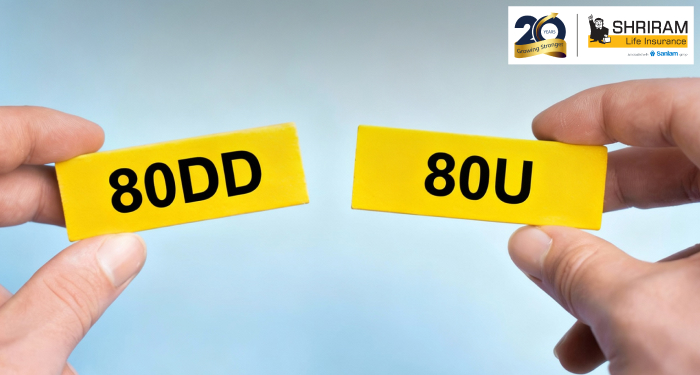
When you hear Section 80DD and Section 80U, both relate to disability-related tax deductions under Indian tax laws. But they serve very different people. Understanding the difference between 80DD and 80U helps you choose the correct one while filing your ITR.
What Are 80DD & 80U?
| Section | Who Claims It | Purpose |
| 80U | A person with certified disability | Deduction for yourself if you yourself have disability |
| 80DD | A taxpayer or HUF caring for someone with disability | Deduction for a dependent (spouse, child, parent, sibling, HUF member) with disability |
So essentially, 80U is “you claim it for yourself,” while 80DD is “you claim it for someone dependent on you.”
Eligibility & Limits for 80U and 80DD
Who Qualifies?
- 80U → Only you, if you have a disability certified by a recognized medical authority. Must be a resident individual.
- 80DD → You (or your HUF) if you support a dependent with disability — spouse, parent, child, sibling.
Disability & Deduction Amounts
Both sections use the same thresholds:
| Disability Severity | Deduction Amount |
| Disability ≥ 40% (but < 80%) | ₹ 75,000 |
| Severe disability (80% or more) | ₹ 1,25,000 |
Documents Required
- 80U → A disability certificate for you. No need to submit treatment bills or expense receipts.
- 80DD → Certificate for dependent’s disability, plus proof of maintenance, treatment or insurance premium in some cases.
Conclusion
Both Section 80DD and Section 80U reduce your tax liability — but for different people. If you’re the person with disability, use 80U. If you’re caring for someone else with disability, use 80DD. Know which applies to your situation, use the correct form, and claim the deduction to ease your tax burden.
FAQs
Yes — but only if one claim is for yourself (80U) and another is for a different person (80DD). You cannot claim both for the same person.
No — typically these sections apply under the old tax regime.
80U — no bills; just your certificate. 80DD — certificate for dependent, sometimes receipts / insurance premium proof may be needed.
Plans worth exploring
 Shriram Life Flexi-Shield Plan
Comprehensive Protection

Shriram Life Flexi-Shield Plan  Shriram Life Sunishchit Laabh
Secure your family's future
Shriram Life Sunishchit Laabh  Shriram Life Wealth Pro Plan
Strong Returns, Steady Protection
Shriram Life Wealth Pro Plan
Why Shriram Life
Experience
Lives covered
Claims Settled (FY 2025-26)
Explore more topics
Trending searches
Find the right plan for you
OTP Verification
Please Enter OTP that has been sent to your registered
Mobile Number +91





Get a call Back to Plan Your Life Insurance
OTP Verification
Please Enter OTP that has been sent to your registered
Mobile Number +91

We’ve Got Your Details
You’re one step closer to securing a guaranteed income. Our team will contact you soon.


