


When E-Way Bill is Required?
- Updated On:02 Mar 2026
 Views
Views- 1 min read
https://www.shriramlife.com/blog/advice/when-eway-bill-is-required


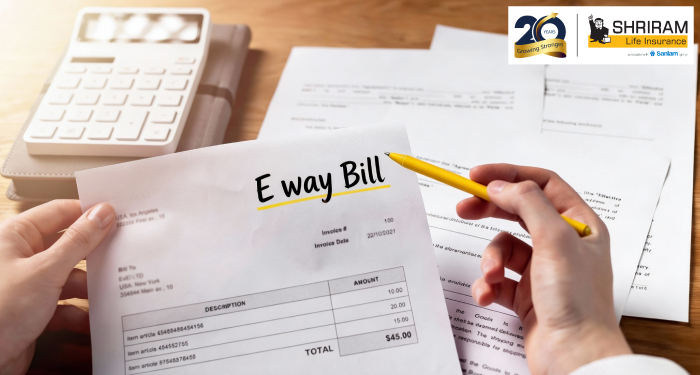
If you’re a business owner or transporter in India, you may be wondering, “When exactly is an E-Way Bill required?” The E-Way Bill system ensures goods movement is compliant under GST.
This guide explains the rules, exemptions, and examples in a simple way, so you know when you need to generate an E-Way Bill.
What is an E-Way Bill?
An E-Way Bill is an electronic document required for transporting goods in India. It contains details of the sender, recipient, transporter, and goods. The rules are governed by Section 68 of the CGST Act 2017 and Rule 138 of the CGST Rules 2017.
When is an E-Way Bill Mandatory?
Threshold Rule:
- If goods are valued above ₹50,000, an E-Way Bill must be generated before movement begins.
Who should generate it:
- Supplier, recipient, or transporter depending on the scenario.
Types of movements covered:
- Supply of goods (sale/purchase)
- Non-supply movements (returns, branch transfers, job work, repair)
Examples of E-Way Bill Requirement
- A supplier sends goods worth ₹60,000 to a buyer.
- A company transfers goods between branches in different states.
- Goods sent to a job worker for processing that exceed ₹50,000 in value.
Exceptions and Special Cases
- Goods below ₹50,000 value generally do not require an E-Way Bill.
- Certain modes of transport, such as non-motorized vehicles, may be exempt.
- Goods under customs transit or notified by the government may also be exempt.
Key Points to Remember
- Generate the E-Way Bill before goods start moving.
- Applicable to both inter-state and intra-state transport.
- Small businesses should check state-specific thresholds or notifications.
Consequences of Non-Compliance
- Penalties for moving goods without an E-Way Bill.
- Risk of legal issues and shipment delays.
Conclusion
An E-Way Bill is required whenever goods valued over ₹50,000 are transported in India. Generating it before movement helps avoid penalties and ensures smooth GST compliance. By understanding exemptions, thresholds, and responsibilities, businesses can stay compliant effortlessly.
FAQs
No, goods below ₹50,000 value generally do not require an E-Way Bill.
Supplier, recipient, or transporter, depending on who is responsible for moving the goods.
Yes, the rules apply to both, but check state-specific notifications for intra-state movements.
Yes, transfers, returns, and job work are included if the value exceeds ₹50,000.
Plans worth exploring
 Shriram Life Flexi-Shield Plan
Comprehensive Protection

Shriram Life Flexi-Shield Plan  Shriram Life Sunishchit Laabh
Secure your family's future
Shriram Life Sunishchit Laabh  Shriram Life Wealth Pro Plan
Strong Returns, Steady Protection
Shriram Life Wealth Pro Plan
Why Shriram Life
Experience
Lives covered
Claims Settled (FY 2025-26)
Explore more topics
Trending searches
Find the right plan for you
OTP Verification
Please Enter OTP that has been sent to your registered
Mobile Number +91




Get a call Back to Plan Your Life Insurance
OTP Verification
Please Enter OTP that has been sent to your registered
Mobile Number +91

We’ve Got Your Details
You’re one step closer to securing a guaranteed income. Our team will contact you soon.


