


Difference Between 80DD and 80DDB
- Updated On:14 Jul 2026
 Views
Views- 2 min read
https://www.shriramlife.com/blog/advice/difference-between-80dd-and-80ddb


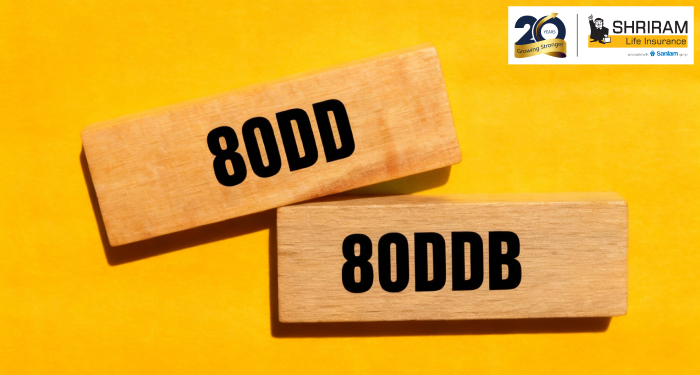
If you are taking care of a disabled family member or if you are paying for the treatment of certain diseases, then you may be entitled to tax benefits. Two of the most important tax sections are 80DD and 80DDB. Here is a simple look at the difference between 80DD and 80DDB.
What Is Section 80DD?
Under section 80DD, a fixed deduction is given to the extent that the medical treatment, care, and rehabilitation of an intellectually challenged/disabled dependent has been provided. In addition to this, the deduction also extends to the expenses of the nursing, training, and payment of the insurance premium for a disabled family member. The relatives can be your spouse, children, parents, brothers, or sisters with at least 40% of the disability.
What Is Section 80DDB?
The main gist of the 80DDB tax deduction is that it will allow you to deduct those medical expenses that were incurred in the treatment of you or your dependent suffering from certain serious diseases. Some of these diseases are cancer, Parkinson's, AIDS, and other ailments that have been mentioned in the list and that require extensive medical treatment.
Key Differences
Scope: 80DD is generally about the expenses related to the maintenance of the disabled dependents, while 80DDB is only for the treatment of certain diseases.
Deduction Amount: 80DD enables one to deduct a flat amount of ₹75,000 (disability more than 40%) or ₹1,25,000 (severe disability more than 80%). The deductions under 80DDB depend on the actual expenses and there is a limit of ₹40,000 for those under 60 years and ₹1,00,000 for senior citizens.
Who Can Claim: The two sections provide for claims by dependents but 80DDB can also be claimed for self-treatment.
Medical Certification: Both require certified medical reports but they differ in the type of disease/disability for which the report is issued.
Example
Imagine that Anita is taking care of her brother who is 50% disabled. For his care and insurance, she can claim ₹75,000 under 80DD. On the other hand, if she incurs ₹60,000 as a cost of her cancer treatment, she can claim a deduction of up to ₹40,000 under 80DDB.
Quick Bullet Summary
- 80DD: Set amount deduction for a disabled dependent’s upkeep.
- 80DDB: Deductions for the actual medical expenses for specified diseases.
- 80DD is for situations where disabilities are more than or equal to 40%. 80DDB is for diseases approved by the government.
- 80DDB may be claimed by the person incurring the expense (self) or the dependent; 80DD only by the dependents.
- Both require submitting medical documentation as proof of entitlement to deduction.
In brief, knowing the differences between 80DD and 80DDB will lead you to the correct tax benefits. Don't forget to verify your eligibility and make the right decisions about your tax filing.
FAQs
Medical or disability certificates, bills of the expenses, and insurance deeds.
Your spouse, children, parents, and siblings who are fully dependent on you.
Plans worth exploring
 Shriram Life Flexi-Shield Plan
Comprehensive Protection

Shriram Life Flexi-Shield Plan  Shriram Life Sunishchit Laabh
Secure your family's future
Shriram Life Sunishchit Laabh  Shriram Life Wealth Pro Plan
Strong Returns, Steady Protection
Shriram Life Wealth Pro Plan
Why Shriram Life
Experience
Lives covered
Claims Settled (FY 2025-26)
Explore more topics
Trending searches
Find the right plan for you
OTP Verification
Please Enter OTP that has been sent to your registered
Mobile Number +91





Get a call Back to Plan Your Life Insurance
OTP Verification
Please Enter OTP that has been sent to your registered
Mobile Number +91

We’ve Got Your Details
You’re one step closer to securing a guaranteed income. Our team will contact you soon.


